
lead time for a flexible PCB supplier
The pandemic has caused shortages of everything from toilet paper to hand sanitizer, but one product designer’s frustration has been particularly intense: printed circuit boards. Limited supplies and increased demand for these critical electronic components have skyrocketed lead times, making it challenging to manage projects on a tight timeline. However, there is a solution for those who need quick-turn PCBs and don’t want to wait. The key is to find a fast-turn flex pcb manufacturer that can deliver high-quality products in a timely manner.
RayPCB offers prototype and small-to-medium production runs of a variety of flexible pcb supplier varieties. We provide DFM analysis and recommendations to help optimize your flex design for manufacturability, ensuring a high-quality final product every time. Our fast turnarounds are fueled by optimized manufacturing flows that minimize engineering changes and production steps, resulting in cost savings for our customers.
Rigid and flexible circuit boards differ in their material, manufacturing, and assembly costs. Both types have their unique advantages, depending on a design’s needs and industry demands. For example, rigid circuit boards are appropriate for larger electronics like desktop computers and televisions. On the other hand, flex circuits are designed to fit in compact spaces and can be found in portable devices such as smartphones and wearable technology. In addition to their smaller size, flex circuits can be made to bend or fold, which is an important feature in some designs, especially if the device is expected to be used outdoors.
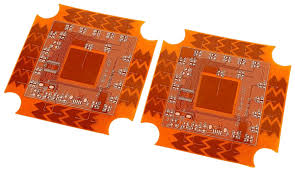
What is the lead time for a flexible PCB supplier?
Despite their flexibility, flex circuits are surprisingly durable and reliable. Their design and material selection ensure that they can withstand repeated bending and folding without snapping or losing their electrical integrity. They are typically manufactured from polyimide (Kapton) substrate and one to multiple layers of copper, ranging in thickness from.0007” to 0.0028”. A thicker flex board will have better conductor performance, but a thinner flex circuit will be more economical.
A high-quality flex circuit board will also be characterized by its resistance to corrosion, radiation, and UV exposure. These characteristics are important for many applications, but they are particularly critical in environments with a high level of vibration or frequent flexing. The best flex circuits will also be able to withstand thermal expansion and contraction.
The lead time for a flex circuit depends on the thickness and copper weight. The higher the thickness and copper weight, the longer the lead time will be. However, the overall lead time is dependent on a number of factors, including the fabricator’s inventory levels and the availability of the raw materials required to manufacture the flex circuit board.
In addition to these factors, it is important to consider the type of board being produced. For example, a high-temperature board will require more heat-resistant materials than a standard board. Moreover, the board’s finish may also affect the lead time. For instance, a glossy board will have a shorter lead time than a matte finish. This is because the more glossy boards have a smoother surface that is easier to machine and solder than matte or satin finishes.