
Rigid-Flex Printed Circuit Board Have on Circuit Routing
Rigid-flex printed circuit boards are used in many applications where the combination of rigid and flexible sections is required to provide strength and adaptability. Rigid-flex PCBs are commonly seen in aerospace, automotive and industrial technology as well as medical and telecommunication equipment. They can be utilized for a wide range of design purposes, such as to optimize space utilization and fit components in tight spaces, or to achieve unique form factors.
Rigid flex circuits are more expensive than traditional rigid circuits due to the specialized materials, technology and manufacturing processes required to create them. However, the initial investment can be offset by long-term cost savings that result from the reduction in the need for external connectors and cables, along with shortened assembly and maintenance time.
Using rigid-flex printed circuit board can also allow for increased component density on the board, which in turn lowers overall system weight. In addition, their conductive material is much thinner than that of a rigid PCB, allowing for narrower circuit traces. These thinner traces lead to greater signal integrity and a lower power loss than their rigid counterparts, making them ideal for applications that require a high level of reliability.
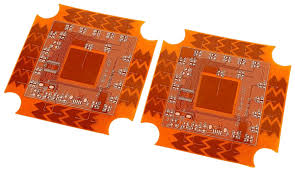
What Impact Does a Rigid-Flex Printed Circuit Board Have on Circuit Routing?
The main concern for a designer is how to route the traces across the rigid and flexible portions of the circuit board. This process requires careful consideration in order to avoid causing any stress or damage to the flexible parts of the circuit, which could impact its performance. Traces should not be routed directly over a bend area, and they should be spaced apart to prevent any contact. In addition, it is important to use thinner traces near the bend areas to reduce their resistance and impedance.
Another consideration is the type of finish used for the rigid-flex PCB. Typical finishes include solder mask and silkscreen, along with gold or silver plating for the edge terminals. These options can affect the final product’s price, so it is important to understand the different finishes and their associated costs before selecting one for a particular application.
In order to ensure that the flexible sections of a rigid-flex circuit are properly protected, they can be covered in a protective layer called a cover lay. This coating is a thin layer of liquid acrylated epoxy and/or polyimide that is applied to the surface of the rigid-flex circuit. This covering protects the underlying layers from damage, and it can also be used to facilitate wire bonding, which increases the overall robustness of the rigid-flex circuit.
In order to guarantee that a rigid-flex circuit will meet its intended requirements, it is crucial that designers work closely with the fabrication company throughout the entire design process. This helps to eliminate any issues that may arise during assembly and reduce the time to market for a new product. This approach is vital for all types of circuit boards, but it is especially essential when working with rigid-flex PCBs, which require a specific set of skills and expertise to manufacture and assemble.