
clean a pcb board assembly manufacturing
The ever-increasing demand for smaller and more powerful electronics devices is forcing manufacturers to fit more micro components onto each PCB (printed circuit board). This transition to tinier and denser boards presents challenges to the assembly process, particularly in terms of cleaning. If not properly cleaned, contaminated circuit boards can fail in the field, leading to expensive product recalls and costly warranty replacements. Fortunately, this can be avoided by using an effective cleaning process to remove contaminants from the surface of each board.
Before any pcb board assembly manufacturing, they need to undergo basic cleaning processes. This is because there are many different types of contaminants that can affect the functionality of a PCB, including residue from production and handling processes. This can include flux residues, rosins, and epoxies. In addition, there are also carbonates, chlorides, and white substances that can form on the surface of a PCB due to various chemical reactions.
These residues can be removed through a simple cleaning process, starting with the use of an alcohol-based cleaner such as isopropyl (IPA) or acetone. A cotton swab or lint-free towel should be moistened with the cleaner and applied to the surface of each circuit board, paying particular attention to areas that display corrosion. This process should be repeated until all visible contaminants have been removed.
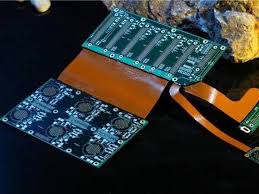
How do you clean a pcb board assembly manufacturing?
Once the PCBs have been wiped down with the cleaner, they should be rinsed with deionized water. This water is free of ions and can be used to wash the PCBs without damaging them. After rinsing, the PCBs should be dried thoroughly with a series of forced air jets. This is to prevent moisture from causing corrosion and other issues.
After a thorough cleaning, a selectively-soldered PCB will usually be subjected to a secondary “spot-cleaning” at the benchtop, using a fast-drying, aerosol packaged flux remover. This will ensure that all remaining residues have been thoroughly heated and deactivated, and that any residual flux has been removed from the areas where hand-soldering took place. Another challenge is maintaining high yields while meeting tight deadlines. Errors in assembly can lead to costly rework or scrapping of entire batches. Therefore, manufacturers must invest in advanced equipment and robust quality control systems to ensure efficiency and minimize defects.
For more stubborn contaminants, an ultrasonic PCB cleaner can be employed. This uses high-frequency vibrations to create microscopic bubbles that implode, removing debris from the surfaces of the circuit boards. This method is ideal for larger volumes of PCBs, as it saves time and allows for a more thorough cleaning than is possible with manual cleaning methods. It is also less likely to cause damage than a pure manual approach.
If the aforementioned methods do not provide satisfactory results, a mild detergent or baking soda can be added to the cleaning solution. This helps to break down and dissolve a variety of contaminants, including solder paste residues, fingerprint oil, and ink markings. Then, the cleaned boards can be sprayed with an etching-resistant solution to further remove stains and residues from the circuit board’s surface.