
stencil printing play in printed circuit board assembly companies
Stencil printing plays a critical role in the printed circuit board (PCB) assembly process, serving as a key step in transferring solder paste onto PCBs before component placement. This process is essential for ensuring precise and reliable connections between electronic components and the PCB, ultimately impacting the functionality and performance of electronic devices. In the realm of PCB assembly companies, stencil printing is a fundamental technique that significantly influences the quality and efficiency of the manufacturing process.
At its core, stencil printing involves the deposition of solder paste onto specific areas of the printed circuit board assembly companies using a stencil, which is typically made of stainless steel or other durable materials. The stencil contains openings or apertures corresponding to the locations where solder paste is required for component attachment. During the printing process, the stencil is aligned with the PCB, and solder paste is forced through the apertures onto the PCB surface using a squeegee or similar tool.
The primary function of stencil printing is to precisely control the deposition of solder paste onto the PCB, ensuring accurate alignment and consistent volume across all solder joints. Proper alignment and volume are crucial for achieving reliable solder connections between components and the PCB, as inadequate or excess solder paste can lead to soldering defects such as bridging, insufficient solder, or tombstoning.
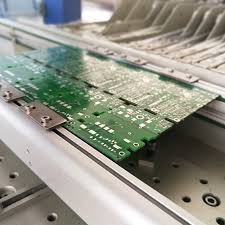
What role does stencil printing play in printed circuit board assembly companies?
Furthermore, stencil printing enables the application of solder paste in a highly efficient and repeatable manner, contributing to the overall productivity of PCB assembly companies. By using stencils with precisely defined apertures and optimizing printing parameters such as pressure, speed, and angle, manufacturers can achieve consistent solder paste deposition across multiple PCBs, reducing variability and minimizing the risk of defects.
Stencil printing also plays a vital role in ensuring the manufacturability of PCB designs, particularly for components with fine pitch or high-density layouts. As electronic devices continue to shrink in size and complexity, the demand for precise and reliable soldering of miniature components has increased. Stencil printing allows PCB assembly companies to meet these challenges by providing a means to accurately apply solder paste to tiny solder pads with tight tolerances.
Moreover, stencil printing facilitates the implementation of advanced soldering techniques such as reflow soldering, where the solder paste is heated to reflow temperature, causing it to liquefy and form solder joints between components and the PCB. The quality of the solder paste deposition achieved through stencil printing directly impacts the outcome of the reflow soldering process, influencing factors such as solder joint integrity, voiding, and overall soldering quality.
In addition to its role in solder paste deposition, stencil printing can also be used for other applications in PCB assembly, such as applying adhesive or solder mask to specific areas of the PCB. This versatility further underscores the importance of stencil printing as a foundational technique in the manufacturing process, allowing PCB assembly companies to address various assembly requirements with a single tool.
In conclusion, stencil printing is a critical process in printed circuit board assembly companies, enabling precise and efficient deposition of solder paste onto PCBs before component placement. By ensuring accurate alignment, consistent volume, and high repeatability, stencil printing plays a crucial role in achieving reliable solder connections and optimizing the manufacturability of PCB designs. As electronic devices continue to evolve and demand for miniaturization increases, the role of stencil printing in PCB assembly companies will remain indispensable for meeting the challenges of modern electronics manufacturing.